Written from the trenches of Auckland real estate by Amit Sharma — Bayleys agent, 10+ years marketing experience.
Staging is not decorating, and knowing the difference is what keeps the budget sane. Decorating expresses taste. Staging removes distraction and makes space legible — how big a room is, what it is for, how the house flows. Almost all of that can be done for nothing, and the paid tiers below only matter once the free work is genuinely finished.
For $0: declutter ruthlessly. Remove half of everything on every surface, then half again. Pack away personal photos, magnets, and any item that says "this is someone else's home". Buyers need to imagine themselves living here.
The reason personal photographs work against you is not sentimental, it is attentional — a buyer looking at your family is not looking at your house. The same applies to anything that starts a conversation: sports trophies, political stickers, a wall of qualifications. None of it is bad. It just spends attention you need somewhere else.
For $0: rearrange furniture for flow, not for how you currently use the space. Float sofas off walls, create clear walking paths, and pull dining tables centred under lights. Open every curtain and turn on every lamp before each open home.
Pushing furniture against the walls is the most common mistake and the most counterintuitive to fix, because it feels like it creates space. It does the opposite — it makes the room read as a corridor with a hole in the middle. Floating a sofa even twenty centimetres off the wall and anchoring the seating around a rug makes the same room feel considered and, oddly, larger.
Remove furniture rather than rearranging it wherever you can. Most lived-in homes have roughly a third more furniture than photographs well. If a piece does not earn its place, put it in the garage or in storage — you are moving anyway.
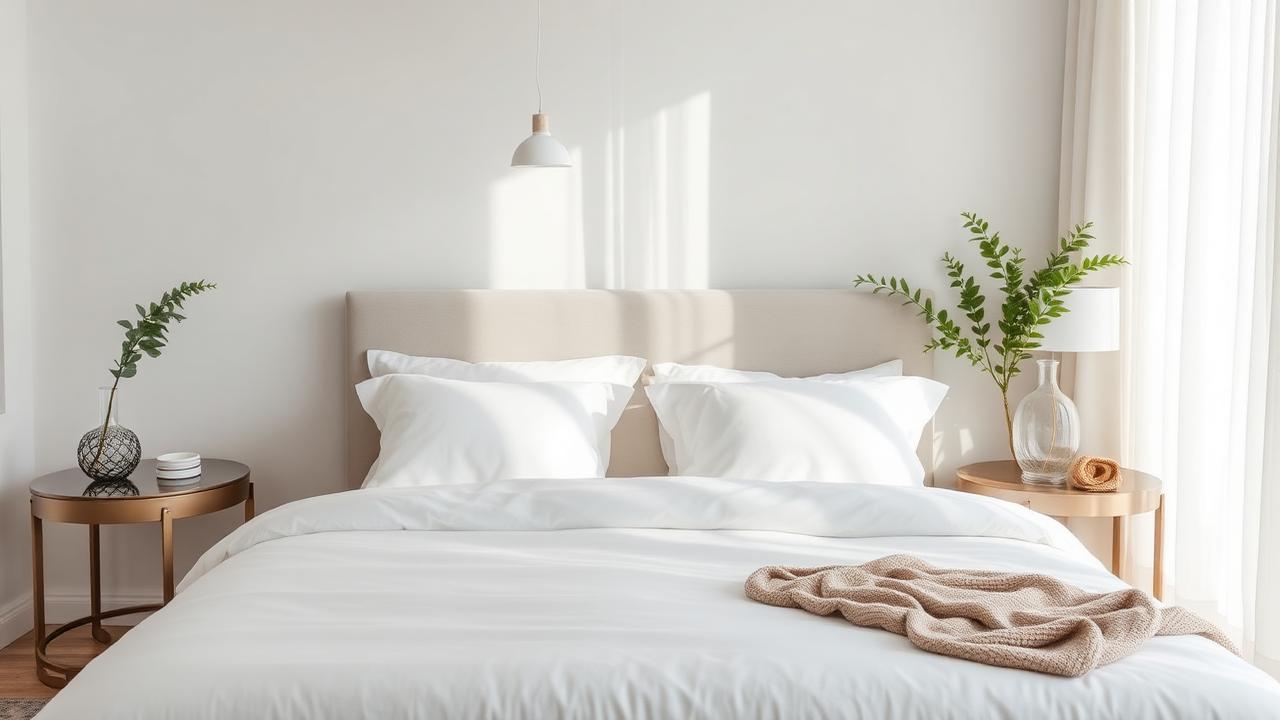
For $500: fresh linens on every bed (white, hotel-style), new towels rolled in the bathrooms, a large neutral rug under the main lounge furniture, three or four large indoor plants from a garden centre, and an oversized fruit bowl for the kitchen island.
Buy the rug big. An undersized rug is the single most common budget-staging error — it makes furniture look like it is floating awkwardly instead of grouped. As a guide, the front legs of the main seating should sit on it. And treat these purchases as things you keep: the linens, towels and plants all move house with you, which makes this tier closer to $0 than it looks.
For $5,000: full professional staging of the main living, dining and master bedroom. Vacant homes especially benefit — empty rooms photograph cold and feel smaller than they are. Staged rooms photograph warm and feel intentional.
Vacant is where paid staging genuinely changes outcomes, for a reason worth knowing: an empty room gives the eye nothing to measure scale against, so buyers consistently guess smaller than reality. Furniture restores the reference. Empty rooms also make buyers wonder why the house is empty, and none of the stories they invent are flattering.
If the budget only stretches to part of the house, stage the rooms that carry the listing — the main living space, the primary bedroom, and any room whose purpose is ambiguous. A spare room with nothing in it is a question mark; the same room with a desk is a home office and a selling point.
Skip: feature walls in bold colours, novelty décor, scented candles set too strong, and anything that draws attention to itself instead of the home. The goal is for buyers to remember the house, not the cushions.
Strong scent deserves its own warning, because it is usually deployed with the best intentions. An overpowering candle or plug-in reads as covering something up, and a meaningful number of people are sensitive to it and will simply want to leave. Air the house out properly instead. Fresh air and clean surfaces beat any fragrance, and they never make anybody suspicious.
One honest caveat on all of this: staging changes how a home is perceived, not what it is. It will not fix a bad floor plan, a difficult aspect or a price set above the market. It makes a fairly priced home look like the best option in its bracket, which is a genuinely valuable thing and not the same as a magic trick.